Dhanushka Silva The D.S. Senanayake cabinet included two Tamil ministers, GG Ponnambalam and C. Sittampalam. The Prime Minister requested that a suitable Tamil translation be adopted for the national anthem as soon as a Cabinet Paper on the topic was passed. Scholar Panditha M. Nallathambi was
Dhanushka Silva It has become a common occurrence in Sri Lanka to see society debate on the language in which the national anthem of Sri Lanka should be sung and it arises at nearly every national festival. Such dialogue also took place on the eve of the 73rd Independence Day celebrations. The majority Sinhala community […]
Jayasiri Jayasekera Shakthika Sathkumara, a writer who had been facing a court case for nearly two years for writing a short story and posting it on his Facebook account, was recently acquitted of all charges. The case was heard in the Polgahawela Magistrate’s Court after the Attorney General informed the court that there was no […]
Ajith Parakum Jayasinghe Every year, the Sinhala, Tamil, and Muslim national movements in Sri Lanka wake up and look to Geneva. To the people of Sri Lanka, Geneva is a word that has a political meaning that goes beyond just a Swiss city. The purpose of this article is to understand what Geneva is all […]
Neville Uditha Weerasinghe The news of the ‘Ayurveda Paniya’ developed by Dhammika Bandara, a traditional medical practitioner spread like wildfire in Sri Lankan social media circles as well as in some mainstream media circles. According to a report by #Hashtag Generation, this was one of the most highlighted news items on social media in Sri […]
Dhanushka Silva The contradiction between the plurality of the international system and the universality of the human rights concept outlines the importance of other actors sharing the responsibility of human rights protection. The human security paradigm recognizes human rights to be a solidaristic concept where human rights are universal. However, conversely, the
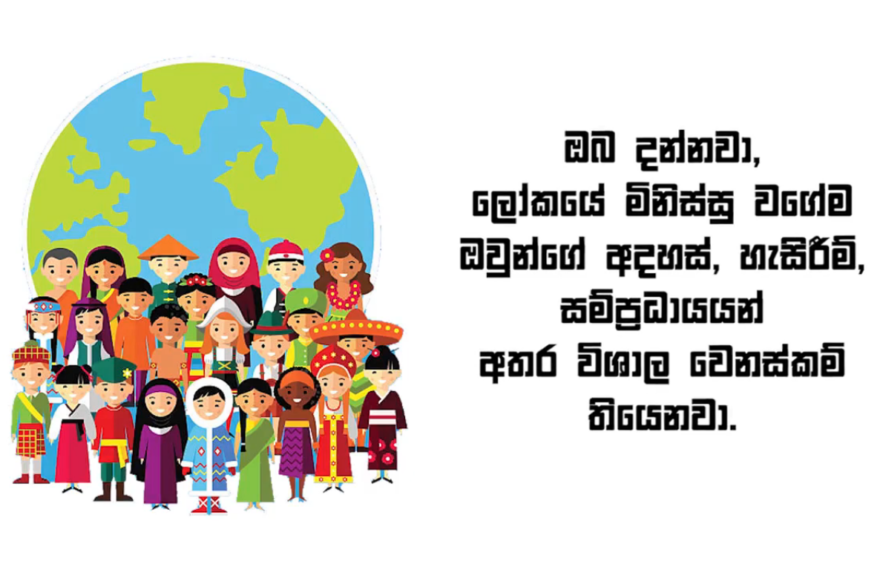
Dhanushka Silva Human rights belong to human beings by virtue of their humanity. According to the Universal Declaration of Human Rights in 1948, human rights are universal, inalienable, indivisible and interdependent. The dawn of the human security paradigm brings to light the idea of human rights and the duty of the state in ensuring the […]